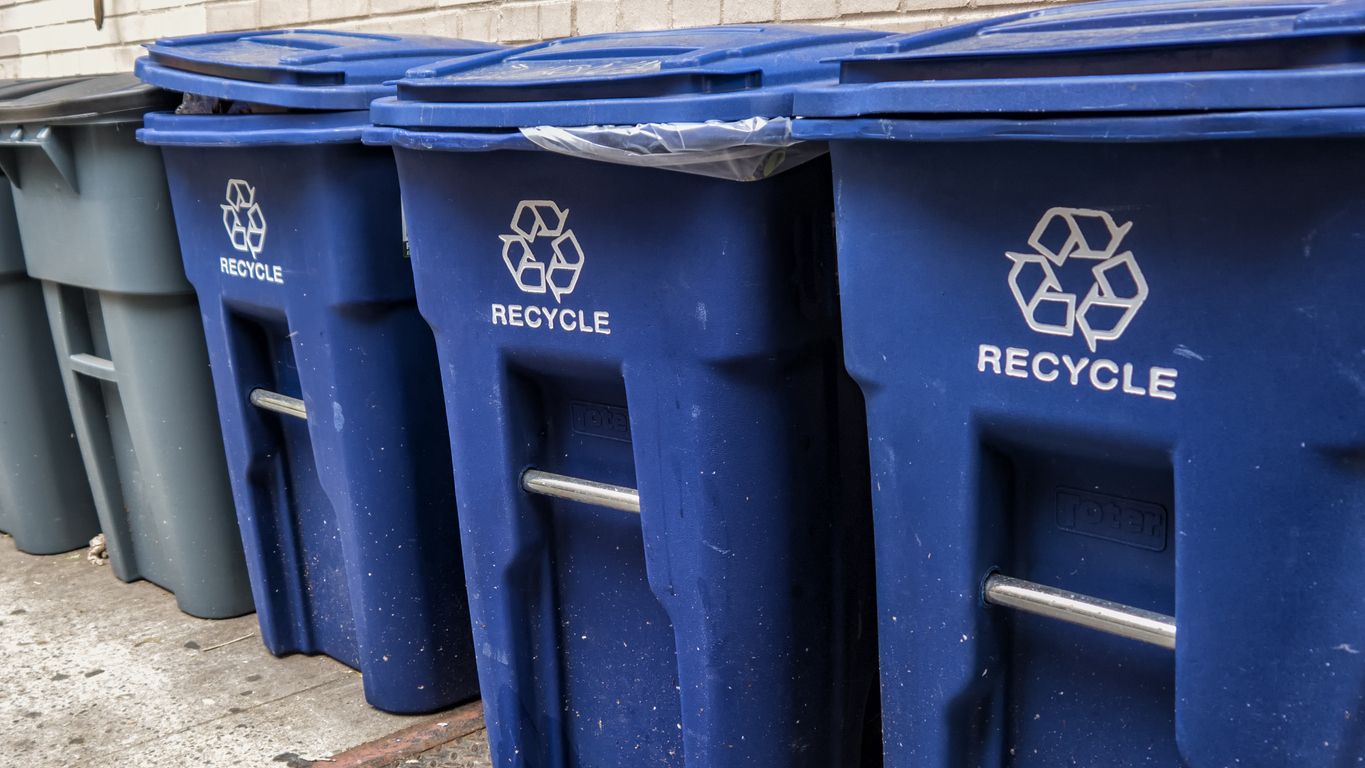
When companies evaluate whether plastic fits into their ESG goals, there are opportunities. For some brands, recyclable plastic can support sustainability commitments and strengthen messaging around environmental responsibility.
Public sentiment supports this idea. Surveys consistently show that people want to recycle plastic, and recycling itself remains widely popular. However, confusion and misinformation about how plastic is actually recycled often become barriers — not just for consumers, but for companies trying to build effective recycling programs.
A 2024 report from CleanHub highlights two major gaps in understanding plastic’s role in the circular economy:
- Low volume: Only about 5% of plastic is recycled
- Low confidence: Just 19% of people surveyed believe their plastic is actually recycled into new materials
If you asked which materials belong in the “value-bearing” recycling stream, most people would name corrugated cardboard, white paper and aluminum. Plastic is rarely mentioned — yet it can also be part of the solution.
The reality of recycling plastics in the U.S. is not that plastic has no value, but that the type of plastic being recycled matters significantly.
The real state of recycling in the U.S
The low rate of the recycling of plastic largely comes down to the resins used to manufacture plastic and how easily they can be repurposed into new products.
Some polymers are more difficult to recycle than others. For example, PVC contains chlorine, which can release toxic fumes when heated during processing. Plastic blends pose another challenge because different polymers melt at different temperatures and have incompatible chemical properties, making them difficult to separate and reprocess.
The limitations of recycling plastics
Other polymers, specifically PET, HDPE and polypropylene (PP), are more resilient, capable of withstanding multiple recycling cycles before material quality begins to deteriorate.
This raises an important question: If several plastics can technically be recycled, which ones perform best in real-world recycling systems? HDPE emerges as the front runner.
Types of recyclable packaging: Why resin type matters
PET (#1) and HDPE (#2) are the most widely accepted plastics in both municipal and commercial recycling programs. End markets for recycled PET and HDPE are well established, largely because these materials are easier to sort, process and remanufacture.
Recycled PET is commonly used in food and beverage containers, construction materials, and textile fibers for jackets and sleeping bags. In 2025, the recycled PET market was valued at nearly $13 billion.
HDPE shows even stronger demand.. Recycled HDPE is used across consumer goods, packaging, automotive components and construction applications. The global HDPE recycling market was valued at nearly $18 billion in 2024, reflecting its strong performance and consistent demand.
For a deeper dive on HDPE as a value-bearing material, read Achieving ESG Goals with Sustainable HDPE Plastics.
Polypropylene (#5) presents a different case. While PP is technically recyclable, it is less frequently recovered in practice. Its lightweight nature makes it harder to capture at recycling facilities, and PP is often used in mixed or flexible packaging formats that complicate sorting. That said, end markets for recycled polypropylene are growing, particularly for containers, trays, caps and pouches. In 2024, the market for recycled PP was valued at approximately $9.2 billion.
HDPE: The best fit in your circular economy
At the end of its use phase, HDPE is a well-established, value-bearing material due to its ease of recyclability. But recyclability alone doesn’t tell the full story of plastic’s role in the circular economy. What’s often overlooked when evaluating materials against ESG initiatives is performance during the service life. That’s where HDPE comes in.
For reusable applications intended to replace corrugated cardboard, HDPE is difficult to outperform.
Constructed with a dense molecular structure, HDPE resists impact, does not crack or craze, and maintains performance longer than polypropylene (PP) in comparable applications.
While HDPE typically carries a higher upfront cost than PP, its durability often delivers a higher return on investment, lower long-term costs and reduced overall material use.
Recyclability matters. But when a recyclable material is also highly durable, the impact is greater. Increased resilience leads to lower turnover, which translates into reduced procurement costs and a meaningful reduction in the total amount of material required over time. That’s a win for companies looking to support and scale a circular economy.
Let us design your solution
Whether you're ready for a quote or researching your options, we're here to help. Contact Liberty Plastics to learn more about flexible solutions with Wave-Core, made with corrugated HDPE for strength and durability.